Memory & evidence
How agents remember, what gets promoted, how knowledge is grounded.
From Feature Stores to Agent Memory: What Production ML Teaches Agent Systems
Production ML lessons for agent memory: availability-time correctness, historical replay, versioned materialization, promotion, correction, and deletion across derived stores.
Agent Memory Should Be Compiled at Recall, Not Replayed From Storage
What MemHarness teaches us about reconstruction, negative transfer, source state, and compiling production agent memory against current evidence, policy, and authority.
Agent Memory Is a Systems Workload: What SelfMem Changes—and What It Does Not
SelfMem improves long-horizon recall by letting an agent optimize its memory strategy. New systems and security research shows the production contract must also cover cost, freshness, provenance, and poisoning.
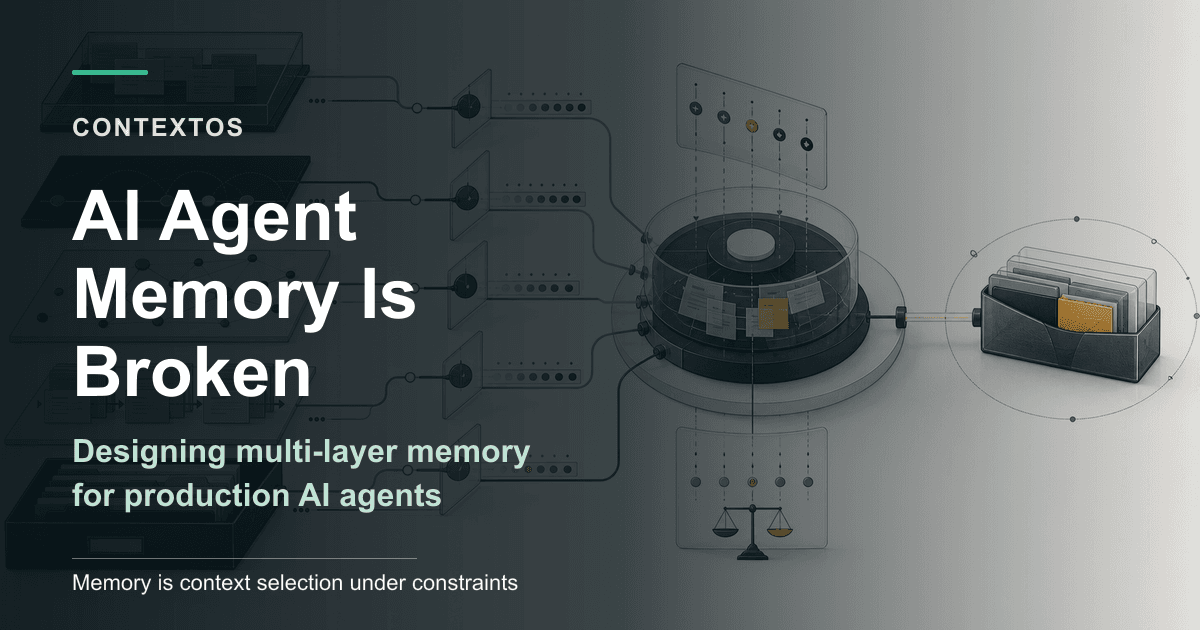
AI Agent Memory Is Broken: Designing Multi-Layer Memory for Production AI Agents
A production guide to AI agent memory architecture: designing long-term memory for AI agents across working, episodic, semantic, procedural, and organizational layers. Why RAG is not memory, why vector databases are not memory, and how governed, situation-aware memory prevents memory poisoning in enterprise AI agents.
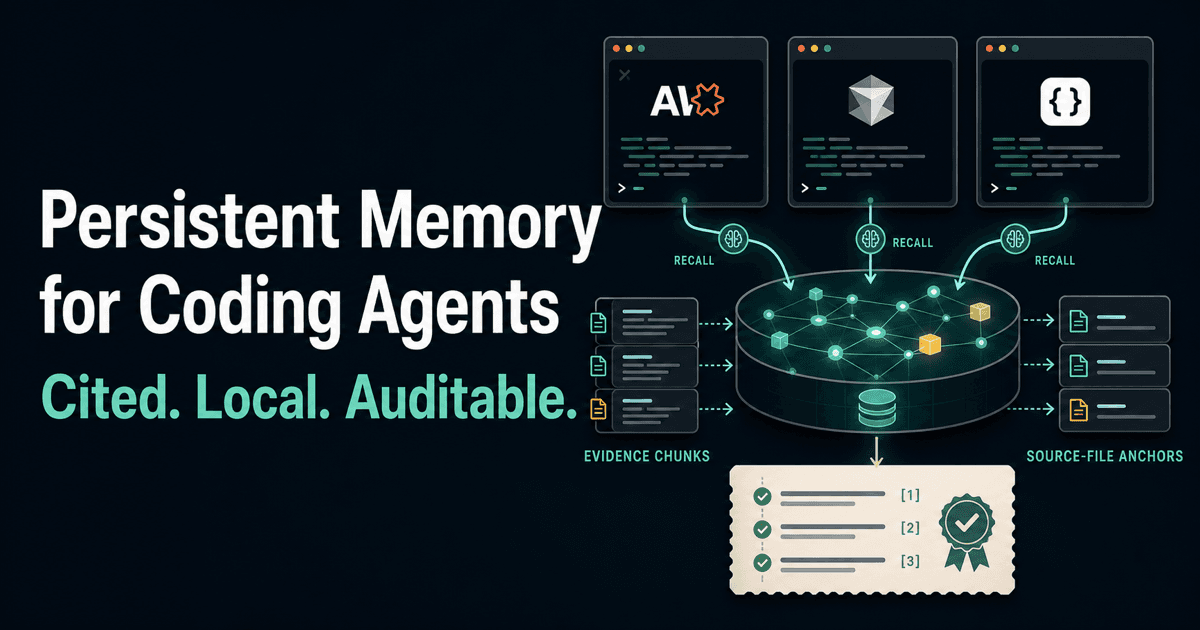
Give Claude Code, Cursor, and Codex Persistent, Auditable Memory
Coding agents are brilliant and amnesiac. SecondBrain's open-source Memory API gives Claude Code, Cursor, Codex, and ChatGPT shared, local-first memory over HTTP and MCP — where every answer carries a citation back to the source chunk.
The Identity Layer: Agents Need Two Identities, Not One
Why governed agent runs need entity identity, delegated user identity, and workload identity in the same RunContext.
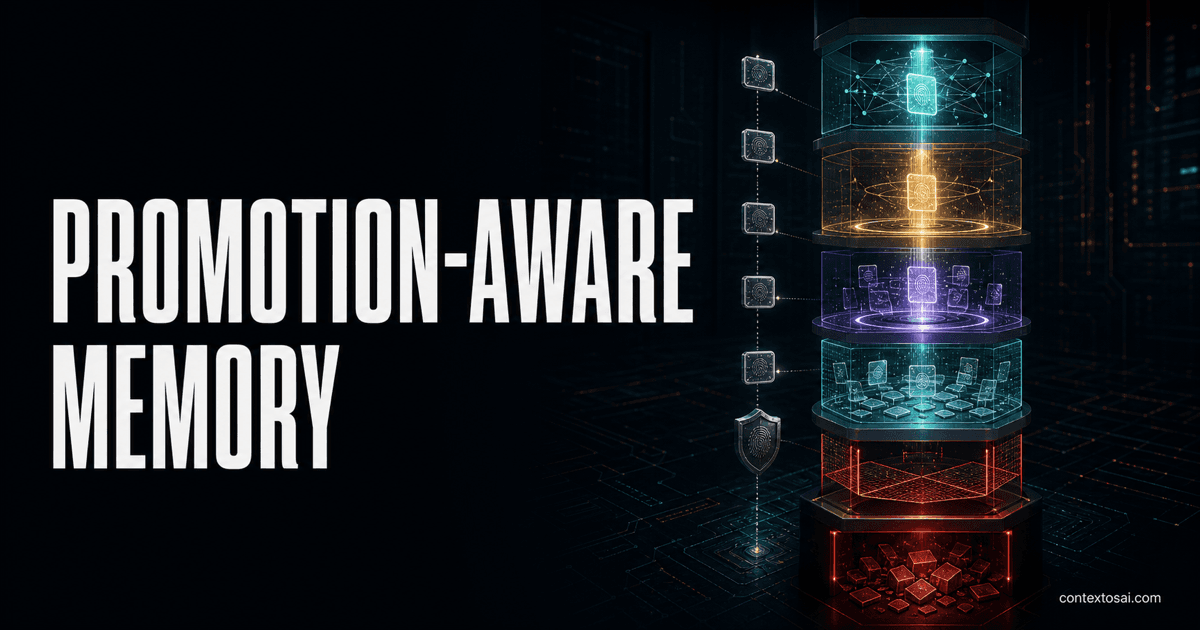
Promotion-Aware Memory: Capture, Review, Promote, Recall in Code
A build-along for agent memory: capture, review, promote, recall, contradiction checks, and governed memory writes.
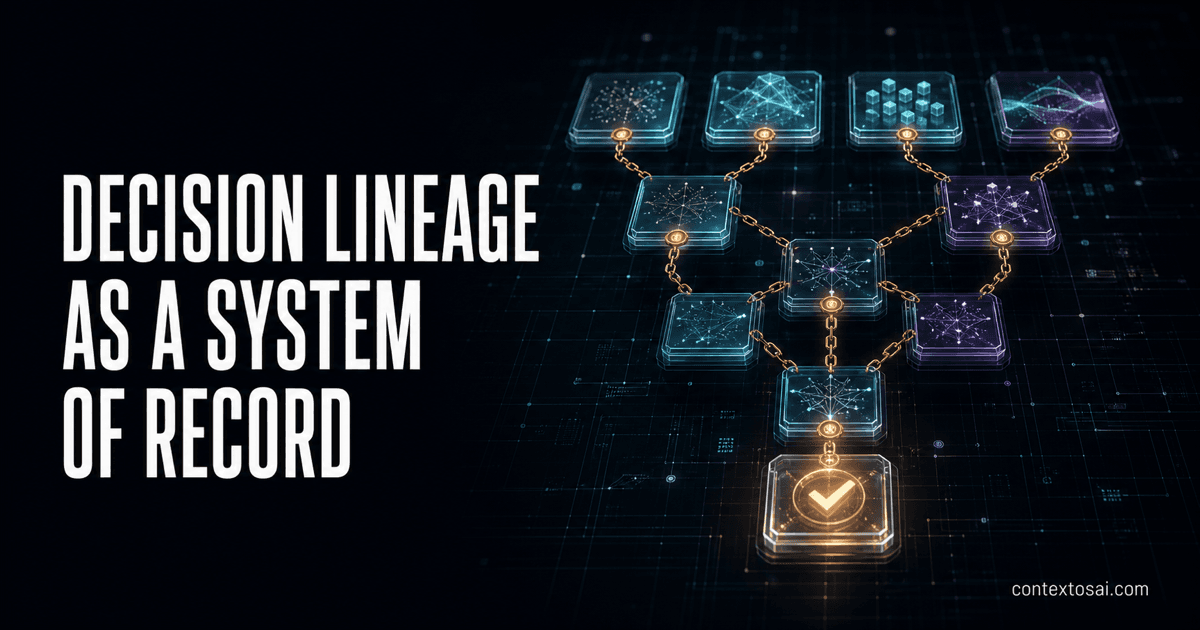
Context Graphs: Decision Lineage as a System of Record
How hash-chained DecisionRecords turn execution-time context into a queryable lineage graph for why an agent acted.