CompiledContext
Context
Only current, verified, in-scope evidence enters the run.
context-manifest.jsoncompiled
pack_versionctxpack.support@5.2.0
evidence_refs3 admitted / 0 unresolved
budget1,864 / 2,400 tokens
compiled_context_hashsha256:9f0b…c41a
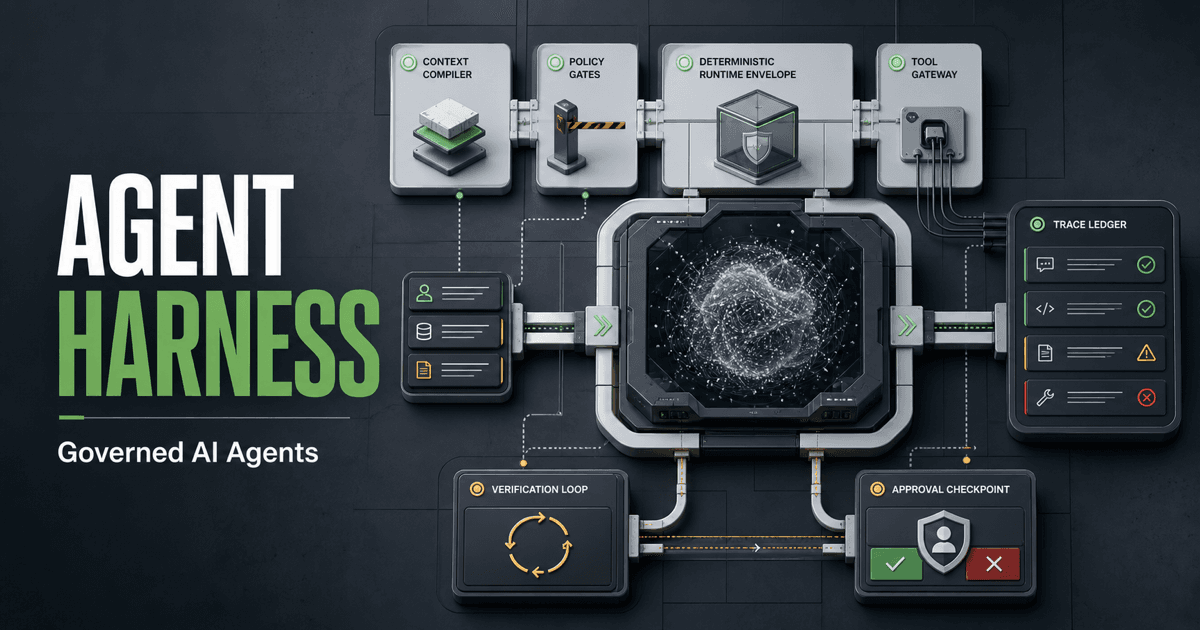
ContextOS helps teams define what successful agent work means, bound what an agent can do, and retain evidence of what happened. Apply its schemas and deterministic compiler reference to your existing runtime, starting with one workflow.
Open specification, reference code, and implementation guides for platform and product teams. Production controls run in your infrastructure.
See ContextOS in actionExplore evidence-backed decisions.
Import account data, prioritize renewal reviews, and inspect the evidence behind each recommendation in this browser-based example.
32 slides · Piyush Kumar
A slide-by-slide guide to harness engineering, context engineering, and governed execution. Read it here or take the PDF with you.
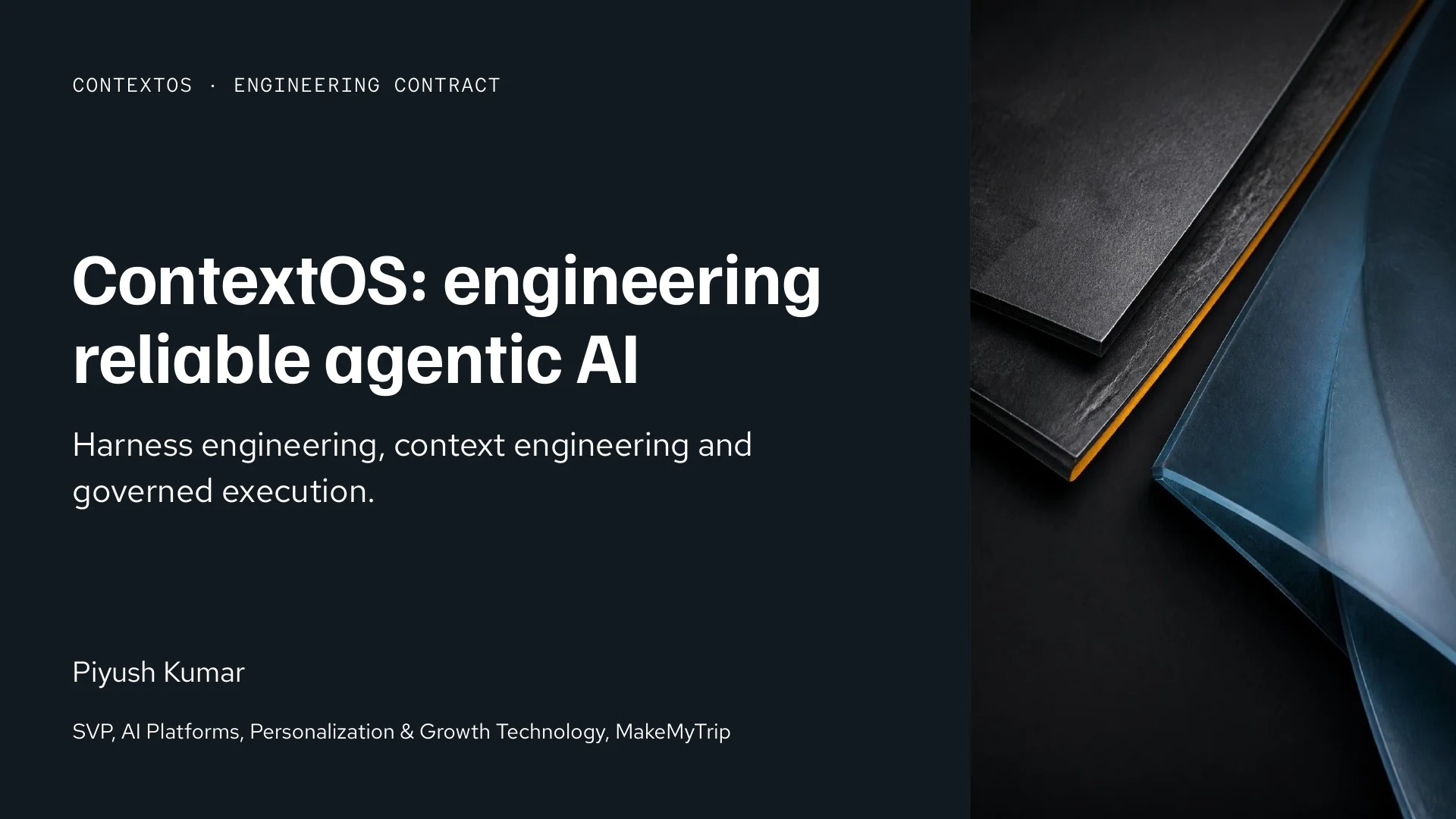
Slide 1 of 32: ContextOS: engineering reliable agentic AI
Use ← → keys or swipe. Home / End to jump.
CONTEXTOS · ENGINEERING CONTRACT ContextOS: engineering reliable agentic AI Harness engineering, context engineering and governed execution. Piyush Kumar SVP, AI Platforms, Personalization & Growth Technology, MakeMyTrip
Follow one illustrative refund run through context, authorization, execution, and acceptance. The artifacts describe an implementing runtime; the site does not execute payments. Recovery depends on the tool and the external system.
Only current, verified, in-scope evidence enters the run.
Policy remains outside the prompt and evaluates the live action envelope.
The model proposes. The Tool Gateway validates identity, scope, arguments, and effect risk.
The path is scored against evidence and gates, not against the agent’s confidence.
The gateway verifies external state and preserves a concrete recovery handle.
The run closes only when the six operational questions have typed answers.
Use the planes to assign ownership of evidence, model input, decisions, effects, and controls. They are logical boundaries: one application can implement several planes, and a managed provider can own part of the execution.
identity · evidence · memory
admission · compilation · budget
plan · verify · score
tools · effects · recovery
policy · evaluation · replay
Harnesses now provide long-running execution, tools, skills, and session state. Your application still owns accepted outcomes and authorized effects. ContextOS makes those obligations explicit across implementations.
Specify the accepted outcome, required evidence, and prohibited effects. Check the observed result and the path that produced it.
Compare model, harness, skills, tools, and environment together. Keep version evidence, held-out cases, cost, and a rollback target.
A managed session or connected tool does not establish permission. Bind each effect to the caller, task, policy, and current approval.
Re-test planners, resets, skills, and reviewers when models change. Simplify where evidence supports it while preserving authorization and outcome checks.
Architecture, security, memory, and evaluation explain the design. Use the published contracts and workflow tests to assess an implementation.
Explore all 151 essays