Reviewers & improvement
Reviewer agents, rollouts, operator corrections becoming versioned StrategyRules.

What Production Agent Runtimes Actually Teach ContextOS: Twelve Laws of a Governed Harness
The strongest production agent runtimes converge on twelve architectural laws: compile context, persist state, separate authority from containment, make side effects resumable, treat approvals as typed interrupts, and promote learning only through evidence and replay.
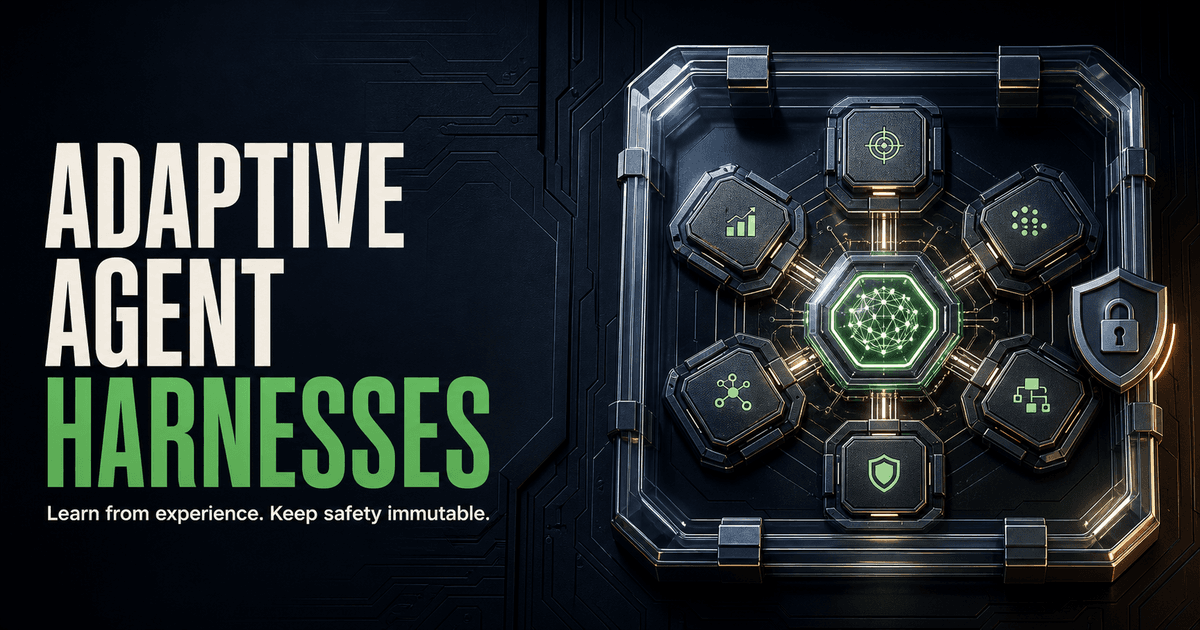
Adaptive Agent Harnesses: Learn From Experience Without Letting Production Rewrite Itself
MemoHarness shows that execution experience can improve the control layer around an LLM. Production systems need a stricter pattern: adaptive performance inside an immutable safety envelope.

Harness Improvement Loops Need Replayable Environments
Why harness improvement needs replayable episodes, bounded mutations, scorecards, source closure, and promotion gates.

Autotune the Harness: Baking the Improvement Loop into ContextOS
How ContextOS treats autotune as a gated loop over traces, scorecards, replay sets, bounded candidates, approval, and rollout.
Building a Compliance Reviewer Agent in 60 Lines and a Golden Set
How to build a compliance reviewer agent with a typed verdict envelope, rubric, golden set, and change-control queue.
Building a Reliability Reviewer Agent: 70 Lines Past the Compliance One
How to extend the reviewer pattern for reliability: timeouts, retries, idempotency, fallback behavior, and rollback declarations.

Pack Rollout in Five Stages: Shipping a Context Pack Without Blowing Up Production
A five-stage rollout model for Context Packs: shadow, internal, low-risk, monitored expansion, full release, and rollback.
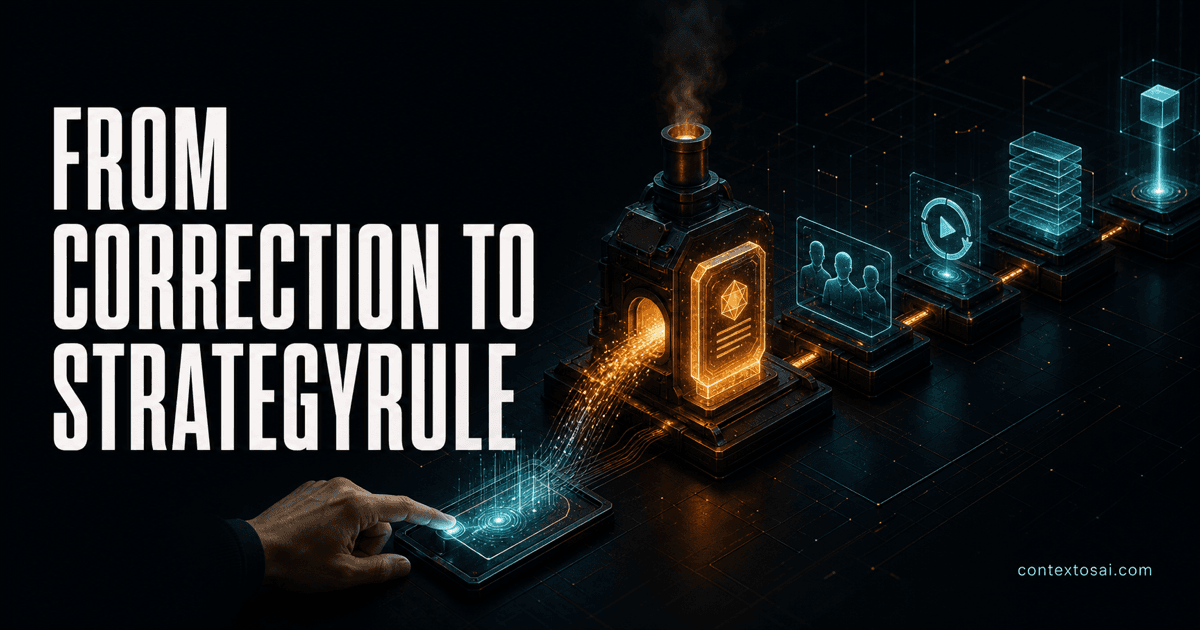
From Operator Correction to Released StrategyRule: The Improvement Loop, Coded
How one operator correction becomes a reviewed, replayed, versioned StrategyRule that prevents repeat agent failures.